
When Being Too Nice Starts Hurting You

Updated: 2 days ago
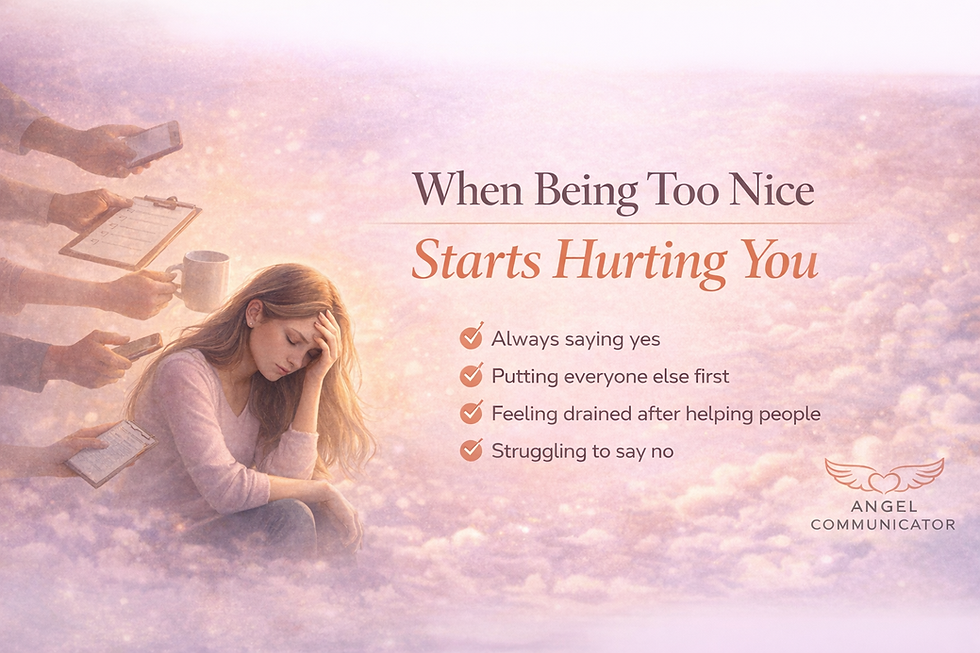
Most people don’t realise the moment it starts happening.
Being nice is something we’re taught very early. Be helpful. Be kind. Don’t make things difficult for other people.
So when someone asks for a favour, you say yes. When someone needs support, you step in. When there’s tension in a room, you smooth it over.
For a long time that feels like the right thing to do.
Until one day you start noticing something uncomfortable.
You’re tired in a way that doesn’t really make sense.
Not physically tired. Something else.
The kind of tired that appears when you’ve been quietly carrying other people’s needs for a very long time.
And that’s usually the moment people start asking themselves a difficult question.
When does being kind stop being healthy?
The Quiet Line Between Kindness And Self-
Sacrifice
Being a kind person is not the problem.
Helping people, supporting friends, and showing empathy are some of the most valuable qualities a
person can have.
The problem appears when kindness slowly turns into self-sacrifice.
When your time, energy, and emotional capacity become something everyone else feels entitled to.
Psychologists often describe this pattern as people pleasing behaviour, where someone feels responsible
for keeping others comfortable even at their own expense.
The First Sign Is Usually Exhaustion
One of the earliest signals that something is off is a strange kind of tiredness.
You’re doing good things. Helping people. Being supportive.
Yet instead of feeling fulfilled, you start feeling drained.
Conversations leave you exhausted. Requests start piling up faster than you can respond to them.
And the strange part is that many people in this position feel guilty even noticing the exhaustion.
They tell themselves they should be grateful. That helping others is the right thing to do.
But emotional burnout doesn’t appear because someone is a bad person.
It appears because their energy has been stretched too thin for too long.
You Start Saying Yes Before You Even Think
Another subtle sign is how quickly the word yes appears.
Someone asks for help and you agree almost automatically.
Not because you truly have the time.
Because the idea of disappointing someone feels uncomfortable.
Many people who struggle with this pattern learned early in life that being agreeable kept relationships
stable.
Being helpful kept the peace.
So saying no starts to feel almost unnatural, even when it would be the healthiest option.
The Hidden Cost Of Being The “Reliable One”
People who are consistently nice often develop a certain reputation.
They become the reliable one.
The person who always helps. Always listens. Always shows up.
At first that reputation feels positive.
But over time it creates an unspoken expectation.
Others start assuming you will always step in.
And slowly your own needs begin moving further down the list.
Resentment Quietly Appears
One of the most confusing parts of this experience is the feeling that appears next.
Resentment.
Not necessarily toward specific people. Often toward the situation itself.
You realise you’ve been giving a lot of energy while very little space exists for your own needs.
And because you care about people, that resentment can feel uncomfortable to acknowledge.
But resentment usually isn’t a sign someone is unkind.
It’s often a signal that their boundaries have been crossed for too long.
The Moment People Start Changing
The turning point usually happens when someone recognises something simple but important.
Kindness and boundaries are not opposites.
In fact, healthy kindness often requires boundaries.
Saying no sometimes protects your ability to say yes when it truly matters.
Taking care of your own energy makes it possible to continue supporting others without becoming
overwhelmed.
The Quiet Shift Toward Healthier Kindness
People who begin adjusting this pattern don’t usually become cold or selfish.
What changes is balance.
They start noticing when they’re tired. They pause before agreeing to every request. They allow
themselves time to think before responding.
And surprisingly, their relationships often become healthier.
Because kindness that comes from genuine willingness feels very different from kindness that comes from
obligation.
A Different Way To Think About Being Nice
Being a kind person is something worth protecting.
But kindness was never meant to require constant self-sacrifice.
It works best when it moves in both directions.
Support flowing outward to others, and respect flowing back toward you.
When that balance exists, kindness doesn’t drain you.
It strengthens the relationships around you instead.


Comments